




Step-by-Step Guide on How to Land Your First Client Without Cold Calls

Cold calling has become the default advice for beginners.
“Just DM 100 people a day.”
“Send emails until someone replies.”
“Pitch everyone you see.”
But anyone who has actually tried this knows the truth: it’s exhausting, demoralizing, and often ineffective. You start to feel like a nuisance instead of a professional. Your confidence drops. Your energy disappears. And worst of all, you begin to question your own value.
Landing your first client should not require you to beg strangers for attention.
It should require strategy, clarity, and positioning.
This guide walks through a practical, experience-driven approach to getting your first client without cold calls, without spammy outreach, and without feeling desperate.
Why Cold Calling Fails for Most Beginners
Cold calling fails not because it is impossible, but because it demands emotional resilience, sales mastery, and rejection tolerance that most beginners do not yet have. It throws you into high-pressure conversations before you have built confidence, credibility, or positioning.
When someone does not know you, does not trust you, and did not ask to be contacted, the psychological barrier is already high. Every “No” feels personal. Every ignored message feels like proof that you are not good enough. Over time, this damages consistency.
There is a better way.
Instead of forcing attention, you can attract interest.
Instead of interrupting strangers, you can position yourself to be discovered.
Instead of chasing clients, you can build credibility that draws them in.
This is not theory. This is how many sustainable freelance and service careers are actually built.
Step 1: Define What You Actually Want to Be Hired For
The first mistake beginners make is trying to be everything.
“I do design, writing, branding, social media, web, marketing, editing, and strategy.”
That sounds flexible, but in reality, it sounds unclear.
People do not hire uncertainty.
Your first client will come faster when your positioning is simple and specific. Not perfect. Not overengineered. Just clear.
Instead of saying you are a “freelancer,” you might position yourself as:
A social media designer for small businesses
A content writer for tech startups
A video editor for YouTube creators
A logo designer for new brands
Clarity does not limit you.
Clarity makes you easier to trust.
When people can immediately understand what you do, they can also immediately imagine when to recommend you.
Step 2: Build Proof Before You Feel “Ready”
One of the biggest myths beginners believe is that they need clients before they can build credibility.
In reality, you need credibility before you get clients.
This does not mean lying or pretending. It means creating demonstrated capability.
You can build proof through:
Personal projects that show your thinking and skills
Redesigning existing brands as practice and showcasing the process
Writing insightful posts about your area of expertise
Sharing behind-the-scenes of your learning journey
Documenting your process publicly
People trust visible effort.
People trust consistency.
People trust clarity of thought.
When someone lands on your profile or website, they should quickly see that you are not just interested in the field — you are actively practicing within it.
That is real Experience.
That is real Expertise.
That is E-E-A-T in action.
Step 3: Make Your Online Presence Say the Right Things
Your online presence is often your first impression long before someone speaks to you.
If your bio is vague, your content is random, and your profile feels neglected, people subconsciously move on. Not because you lack skill, but because your presentation signals uncertainty.
You don’t need perfection.
You need coherence.
Your profile should communicate:
What you do clearly
Who you help
What makes your approach thoughtful
Evidence that you are active in your field
A simple way to contact you
When your presence is clear, opportunities begin to feel less accidental. People who resonate with your work start to pay attention quietly before ever reaching out.
This is how inbound interest begins.
Step 4: Share What You’re Learning Publicly (Even as a Beginner)
Many beginners wait until they feel like experts before they speak publicly. This delay often costs them their earliest opportunities.
You do not need to teach like a professor.
You can share like a practitioner.
You can post about:
Lessons you learned while practicing your skill
Mistakes you made and how you corrected them
Breakdowns of good work you admire
Insights from courses you are taking
Observations from real projects you are experimenting with
This does two powerful things.
First, it shows authenticity. People trust growth more than perfection.
Second, it attracts the right kind of attention: people who value thinking, not just outcomes.
Many first clients come not because someone advertised aggressively, but because someone consistently showed their journey and built quiet credibility over time.
Step 5: Use Warm Conversations Instead of Cold Outreach
There is a big difference between cold outreach and warm conversation.
Cold outreach is when you message someone who has no idea who you are.
Warm conversation is when you engage with people who already recognize you.
Warm conversations can begin through:
Commenting thoughtfully on posts in your niche
Replying with insight, not flattery
Engaging consistently with the same communities
Participating in discussions where your target clients spend time
Being helpful without immediately selling
Over time, familiarity builds. People begin to recognize your name. They associate you with useful thoughts. They begin to trust your presence.
Then when you reach out, it does not feel like a stranger interrupting them. It feels like a familiar voice continuing a conversation.
That shift changes everything.
Step 6: Make It Easy for People to Say Yes
Even when someone is interested, they can still hesitate if the process feels unclear.
Beginners often lose potential clients not because of lack of skill, but because the next step feels confusing.
You should make it simple for someone to understand:
What you offer
What working with you looks like
How they can start
What they can expect
How to contact you
This could be as simple as a short page, a clear pinned post, or a well-structured message. When people feel clarity, they feel safety. When they feel safety, they are far more likely to commit.
Trust grows not just from talent, but from professionalism.
Step 7: Position Yourself Where Intent Already Exists
One of the smartest ways to land your first client faster is to spend time where people are already looking for solutions.
Instead of trying to convince people they need you, you position yourself where the need already exists.
This is why platforms designed around intent matter so much.
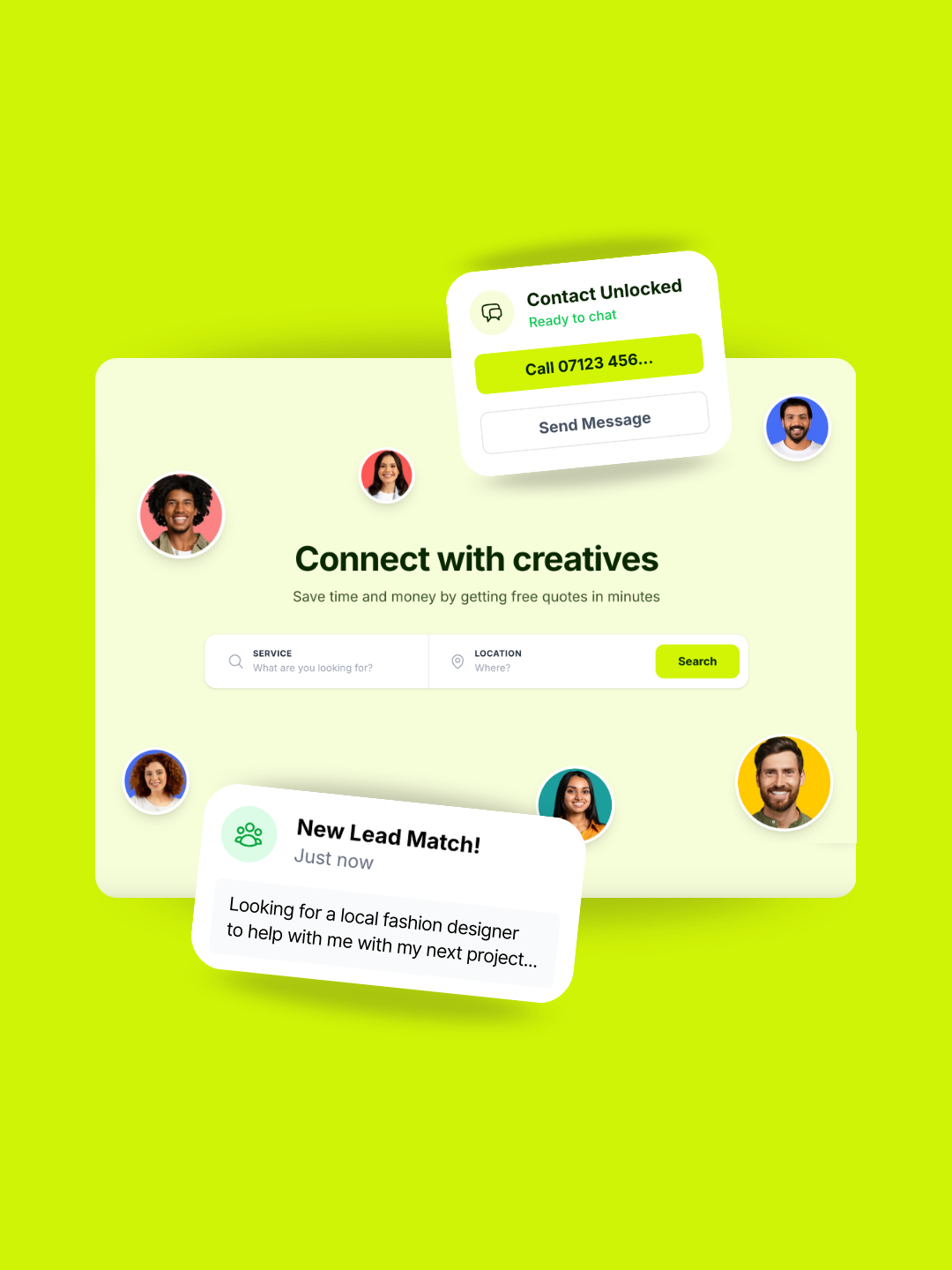
Agoraleads, for example, is built around a simple insight: clients are already looking for the right creative, and creatives are already looking for the right client. By structuring the journey from brief to match to chat to booking, the platform removes much of the friction beginners struggle with elsewhere.
Instead of shouting into the void, you are entering conversations where intent already exists.
That changes the emotional experience completely.
You are no longer chasing.
You are showing up prepared.
Step 8: Your First Client Is Usually a Relationship, Not a Campaign
Many beginners think their first client will come from a big strategy. Often, it comes from consistency.
A friend who noticed your growth.
Someone who has been watching your posts quietly.
A connection who finally needs exactly what you offer.
A person who remembers your thoughtful comment months later.
This is why patience and presence matter.
When you show up consistently, speak clearly about what you do, and build visible credibility over time, opportunities begin to emerge naturally. Not explosively. But steadily.
That is how sustainable careers begin.

Final Thoughts: You Don’t Need to Chase Your First Client
You don’t need to spam inboxes.
You don’t need to beg for attention.
You don’t need to pretend to be bigger than you are.
You need clarity.
You need consistency.
You need credibility.
You need patience.
Landing your first client is not about becoming louder.
It is about becoming more visible in the right way.
When you focus on positioning yourself well, sharing your journey honestly, building proof deliberately, and showing up consistently in relevant spaces, your first client stops feeling like a miracle.
It starts feeling like the natural outcome of the work you’ve been doing all along.